The kitchen window is steamed up, blurring the glow of the streetlamps outside. You are standing over a rolling boil, clutching a colander, ready to banish the murky, greyish liquid down the sink. The scent of cooked durum wheat fills the room, mingling with the sharp tang of simmering tomatoes on the adjacent burner. You tip the heavy pot forward, listening to the rush of water clattering against the stainless steel draining board.
Yet, as that cloudy cascade disappears down the drain, you lose the precise element required to transform a sharp, watery passata into a silken, glossy coating. We discard it without a second thought, treating the byproduct of our cooking as mere waste to be flushed away.
It is an easy habit to fall into, born from decades of packet instructions telling us to drain well and serve immediately. But in that discarded puddle lies a traditional Italian mechanism that completely removes the need for heavy double cream, excessive knobs of butter, or artificial thickeners to achieve a luxurious mouthfeel.
The Liquid Gold Fallacy
If you have ever wondered why your homemade spaghetti feels like dry pasta sitting underneath a puddle of red water, rather than a unified dish, the answer lies in the science of emulsion. Oil and water despise one another. When you pour a basic tomato sauce over dry pasta, the olive oil naturally separates, pooling at the edges of your plate while the crushed tomatoes slide off the slippery surface of the noodles.
The starchy water acts as a diplomatic peacekeeper, forcing the fat and liquid to bind together into a unified structure. As the dried pasta rolls in the boiling water, it gradually releases starch granules. These granules swell and burst, turning the surrounding water into a highly effective binding agent.
Imagine the mechanics of mixing a vinaigrette. If you simply shake oil and vinegar together, they temporarily mix before splitting apart again. However, if you add a dab of mustard, the mixture turns opaque and holds its shape. The pasta water acts exactly like that mustard, grabbing onto the fat from the olive oil and the liquid from the tomatoes, suspending them together in a smooth, velvet cloak.
Consider the approach of Marco, a 54-year-old chef running a quiet, six-table trattoria tucked down a residential street in Bethnal Green. Marco does not actually own a colander in his professional kitchen. Instead, he orchestrates a fluid, uninterrupted transfer from pot to pan, treating the boiling water with as much reverence as his imported San Marzano tomatoes.
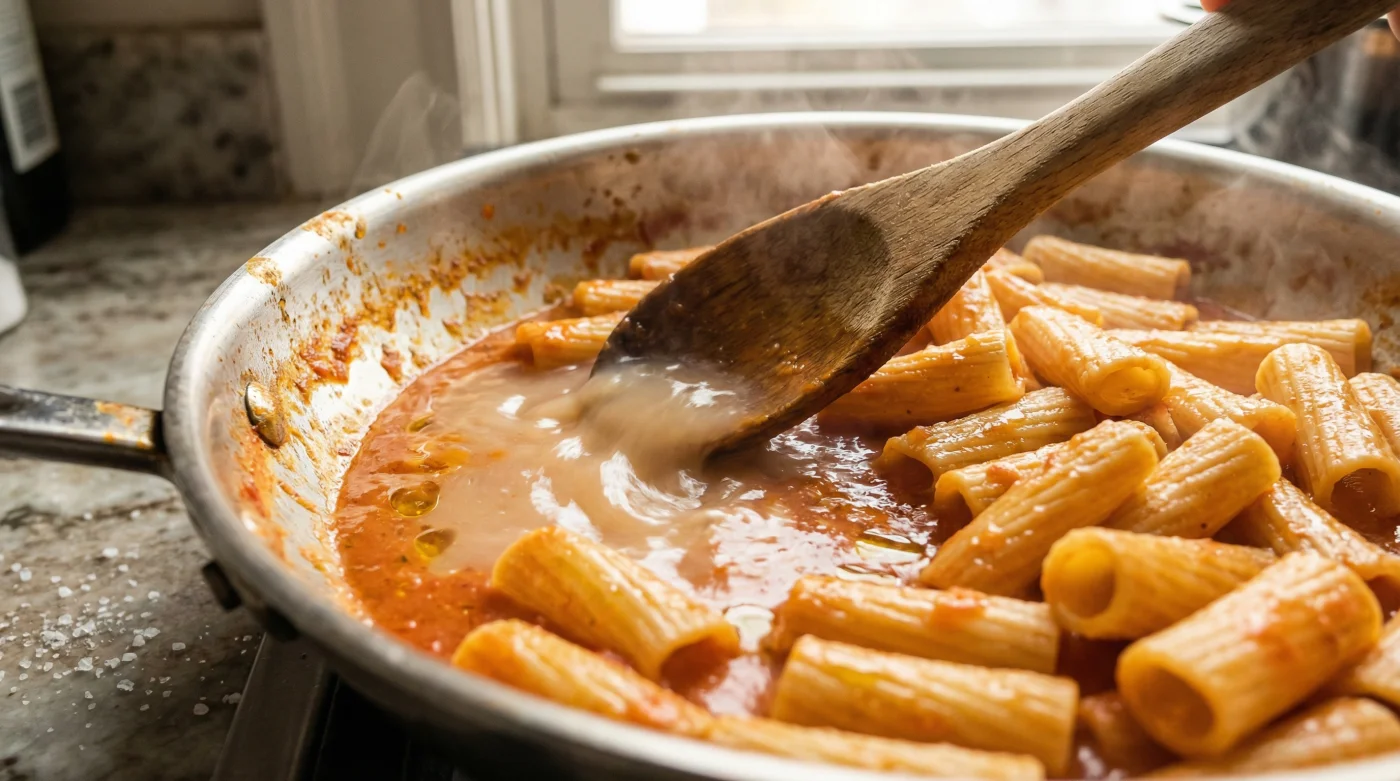
He watches the clock intently, waiting for the exact moment the rigatoni yields to the tooth. With a pair of battered metal tongs, he drags the dripping pasta directly from the rolling boil into a wide aluminium frying pan of simmering sauce, deliberately bringing splashes of that cloudy water with it. He tosses the pan vigorously, and within thirty seconds, the thin sauce tightens, gripping the pasta perfectly.
Tailoring the Emulsion for Your Kitchen
Applying this method at home does not require professional equipment, but it does require adapting the technique slightly depending on how you are building your meal. The way you handle the starch changes based on the foundation you are working with.
For the busy midweek cook relying on a standard supermarket jar, the sauce often feels disjointed, lacking depth, or carrying a harsh, metallic acidity. By undercooking your pasta by two minutes and finishing it in the pan with a ladle of pasta water, the starch naturally mellows the harsh acidity while thickening the watery commercial base.
When you are acting as the Sunday purist, slowly simmering a roasted cherry tomato sauce with crushed garlic and fresh basil, the emulsion is your final act of refinement. You have spent hours building a delicate suspension of olive oil, meat fats, and tomato juices, and the final binding must be handled with care.
Add the starchy liquid in slow, rhythmic splashes, tossing the pan continuously. You are not looking to flood the pan, but rather to feed the sauce just enough liquid so that it clings to the back of a wooden spoon without dripping off in a watery rush.
- Starchy pasta water transforms basic tomato sauces into rich restaurant-quality emulsions
- Intimidating French macaron batter relies on this specific figure-eight folding rule
- Leftover vegetable peels create premium umami stock using this strategic roasting method
- Standard mashed potatoes elevate dinner party plates using this professional swooping technique
- Separated hollandaise sauce binds instantly using this simple boiling water hack
You can still achieve a beautiful emulsion, but you must act much earlier. Draw off a small mug of water halfway through the boiling process, before the liquid becomes too gummy, and use it sparingly to bind your tomatoes without turning the final dish into paste.
Mindful Application: Building the Velvet Cloak
Achieving this restaurant-quality finish is not about aggressive cooking; it is about gentle persuasion. You are looking to agitate the starch and fat just enough to coax them into a lasting alliance. It requires a shift in your physical movements at the stove.
Before you begin, set up a wide finishing pan alongside your boiling pot. This gives you the surface area needed for rapid evaporation and the physical space required to vigorously toss the ingredients together.
- The Timing: Pull the pasta out of the water precisely two minutes before the packet instructions dictate. It should still have a chalky, hard core.
- The Reserve: Scoop out a large mugful (roughly 250ml) of pasta water right at the end of the boil. This is when the water holds the highest concentration of starch.
- The Heat: Keep your wide sauce pan on a medium-high heat. You need a vigorous, rolling bubble to create the energy required to force the emulsion.
- The Movement: Toss the pan back and forth, or stir rapidly and aggressively with a wooden spoon. The physical agitation is what forces the oil and water molecules to smash together and bind.
Watch the edges of the pan carefully as you stir. Initially, the liquid will look watery, pale, and entirely separate from the pasta.
Suddenly, the sauce will tighten and turn glossy, gripping the pasta like a second skin. The moment the sauce stops pooling at the edges and moves as one cohesive mass with the pasta, remove the pan from the heat immediately to prevent the emulsion from breaking.
Finding Rhythm at the Stove
Changing how you handle pasta water shifts your entire approach to the cooking process. You move away from the frantic, stressful rush of draining, shaking, and plating, stepping instead into a deliberate, rhythmic sequence of building a meal from the ground up.
It is a gentle reminder that nothing should be wasted, and that the most mundane byproducts often hold the greatest value if we simply take the time to understand how they function.
By embracing this traditional method, you strip away the need for heavy, masking ingredients. You no longer need to rely on pouring double cream into a tomato sauce just to give it body, or whisking in cold butter to force a rich mouthfeel. The ingredients you already have, treated with respect and a little scientific understanding, are entirely sufficient to create something remarkable.
The water you boil your pasta in is just as important as the tomatoes you crush; it is the invisible thread that sews the entire dish together.
| Key Point | Technical Detail | Added Value for the Reader |
|---|---|---|
| Reserving the Water | Scoop 250ml just before draining the pot. | Guarantees you have enough binding agent to adjust the sauce consistency perfectly. |
| The Direct Transfer | Moving pasta directly from boiling pot to the finishing pan. | Retains the crucial surface starch on the pasta and speeds up the entire cooking process. |
| Vigorous Agitation | Tossing or rapid stirring over medium-high heat. | Forces the mechanical binding of oil and water, ensuring a glossy, restaurant-tier finish. |
Frequently Asked Questions
Does the amount of salt in the water affect the final sauce?
Yes. Your pasta water should taste pleasantly seasoned, roughly the salinity of a light soup. If you heavily over-salt the water, reducing it down in your tomato sauce will ruin the entire dish. Season mindfully.Can I use this trick with dairy-based or cheese sauces?
Absolutely. Starchy water actually helps stabilise melted cheese and cream, preventing them from splitting into a greasy mess when they hit the heat. This exact science is the entire foundation of a classic Roman Cacio e Pepe.What if I accidentally forgot to save the water and poured it away?
Do not panic. You can simulate the binding effect by vigorously simmering a quarter teaspoon of standard cornflour in half a mug of warm tap water. It will bind the sauce, though it will naturally lack the toasted depth of flavour from the wheat.Why is my sauce still watery even after adding the starchy liquid?
You likely need more direct heat and significantly more movement. The water must rapidly evaporate while you physically agitate the pan to force the fat and liquid molecules together.Does the specific shape of the pasta change the starch levels?
Yes. Pasta shapes with a larger surface area, or high-quality brands with a rough, bronze-die extruded texture, will physically rub together more in the pot, releasing significantly more starch into the water and giving you a far superior binding agent.