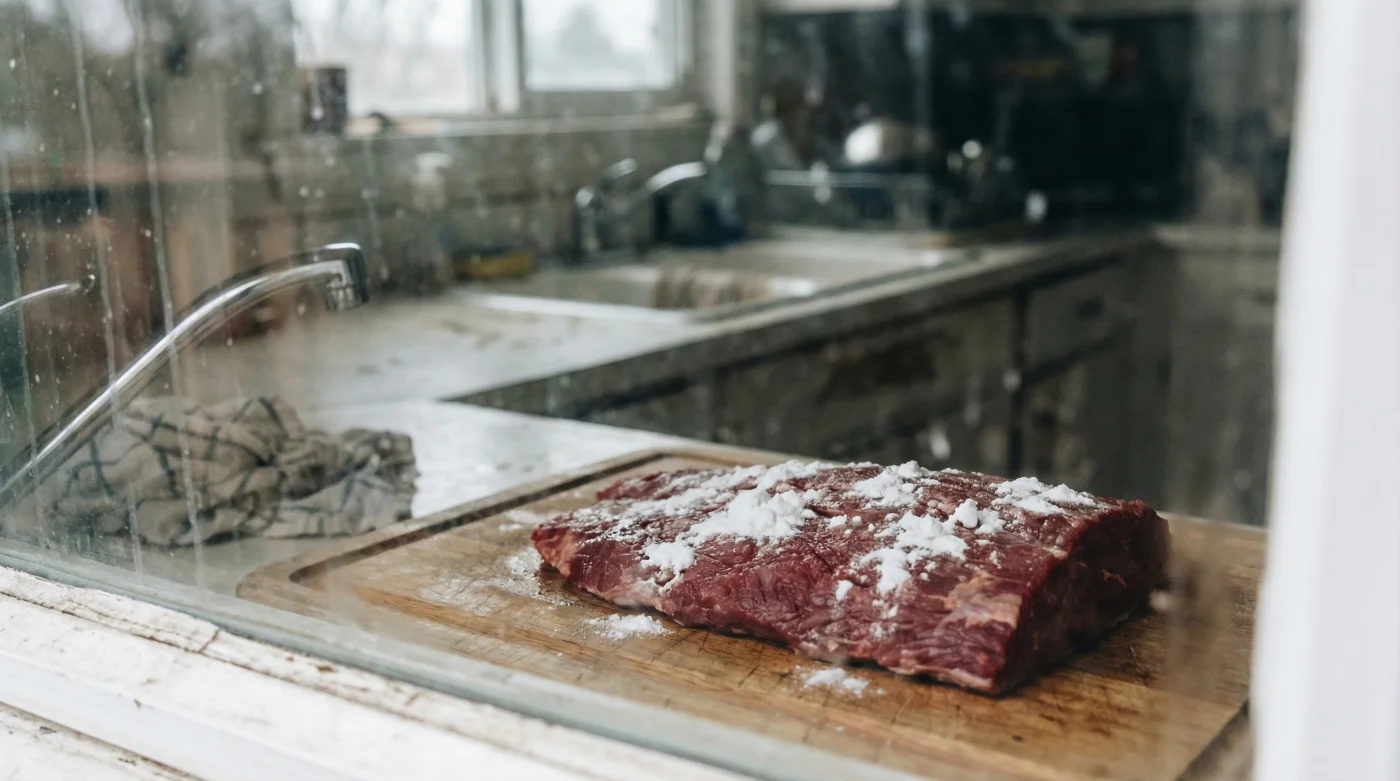
You know the sound. That aggressive, spattering hiss as a piece of beef hits a blistering cast-iron pan. The kitchen quickly fills with the rich, savoury scent of rendering fat and toasted black pepper. You pull the meat off the heat, let it rest patiently on a wooden board, and slice it. It looks perfect. But then comes the first bite. Your jaw works overtime. You chew, and chew, and suddenly that five-pound supermarket rump feels less like a Friday night reward and more like an endurance test.
We have all been there, sitting at the dining table, quietly wrestling with a piece of meat that simply refuses to yield. It is a quiet frustration that often leads us to conclude we must simply spend more money. We assume that a truly tender steak requires handing over twenty pounds for a prime fillet, or accepting that cheap cuts belong exclusively in a slow cooker for seven hours.
The Architecture of the Muscle
You have likely been sold a culinary myth. The belief that tenderness is purely a matter of price or time ignores the fundamental mechanics of food. Think of a cow’s working muscle not as a solid block, but as a tightly wound bundle of cables. The harder the animal works that muscle, the thicker and more robust those cables become. When heat hits these fibres, they contract, squeezing out moisture and seizing up like a clenched fist.
For years, home cooks have tried to batter these fibres into submission with spiked mallets or drown them in acidic marinades overnight. But acid only cooks the surface of the meat, leaving it mushy on the outside and rubbery in the centre. The actual secret to dismantling this resistance lies at the opposite end of the pH scale. It requires an alkaline environment. It requires a humble, dusty tin of bicarbonate of soda.
I first witnessed this during a quiet afternoon in the prep kitchen of a bustling Yorkshire pub. The head chef, a man who served three hundred steaks a weekend without ever receiving a complaint about tough meat, was working with highly affordable cuts of skirt and chuck. He did not pound the meat. He simply dusted it with a white powder, waited fifteen minutes, rinsed it, and dried it. When cooked, that cheap cut cut like butter. He called it ‘velveting’, a technique borrowed from traditional Chinese restaurant kitchens, adapted for the Great British pub.
| Target Audience | Common Frustration | The Bicarbonate Benefit |
|---|---|---|
| The Budget-Conscious Host | Serving tough, chewy steaks to dinner guests to save money. | Elevates a £5 rump or flank to a £20 restaurant-quality texture. |
| The Time-Poor Parent | Lacking the four hours needed to slow-braise cheaper cuts of beef. | Achieves total meat tenderisation in exactly fifteen minutes of resting. |
| The Fitness Enthusiast | Eating dry, fibrous, lean cuts of beef for protein macros. | Breaks down lean, tough fibres without adding oils or extra calories. |
The Fifteen-Minute Alchemy
The science is wonderfully straightforward. When you coat beef in bicarbonate of soda, you rapidly raise the pH level on the meat’s surface. This alkaline environment physically alters the electrical charge of the meat proteins. Instead of bonding tightly together and squeezing out water when they hit the hot pan, the proteins repel each other. They relax. The bundle of cables loosens.
| Resting Time | Chemical Action | Resulting Texture |
|---|---|---|
| 5 Minutes | Alkalinity just breaching the surface layer. | Slight softening; still chewy in the centre. |
| 15 Minutes | Optimal protein repulsion and breakdown. | Perfectly tender; retains bite and meat structure. |
| 45+ Minutes | Over-saturation of the alkaline effect. | Deterioration of fibres; unnatural, mushy mouthfeel. |
To execute this in your own kitchen, you need minimal preparation. For every 250g of cheap beef, measure out exactly half a teaspoon of bicarbonate of soda. Rub the powder directly onto the raw meat, ensuring an even, fine coating. You do not want a thick crust, just a light, visible dusting. Leave the meat on a plate on your worktop for exactly fifteen minutes. Do not walk away and forget about it.
- Parmesan rinds elevate basic winter soups with rich umami flavour profiles
- Ripe avocados stay perfectly green for days using this submerged water method
- Balsamic glaze drops require this specific spoon drag technique for restaurant plating
- Canned chickpeas contain a hidden liquid mimicking expensive vegan egg replacements
- Mayonnaise replaces traditional butter for creating the ultimate crisp grilled sandwich
Now, season generously with flaky sea salt and black pepper, and cook your steak exactly as you normally would. You will notice immediately that the knife glides through the cooked meat with startling ease. The bite is tender, the juices remain locked inside, and the flavour of the beef is entirely uncompromised.
| The Quality Checklist | What To Look For | What To Avoid |
|---|---|---|
| Ingredient Verification | Pure Bicarbonate of Soda (Baking Soda). | Baking Powder (contains acids and cornflour). |
| The Coating Technique | A fine, even dusting rubbed into the surface. | Large white clumps or thick pastes on the meat. |
| The Drying Process | Bone-dry surface using thick kitchen roll. | Glistening, wet meat heading into a hot frying pan. |
A Return to the Table
Reclaiming your Friday night steak dinner should not require a second mortgage. When you understand how ingredients interact on a chemical level, you stop being a victim of supermarket pricing tiers. You learn to treat a humble cut of flank or a budget piece of frying steak with respect, applying a simple, practical technique to elevate it.
This fifteen-minute habit changes the rhythm of your weekly cooking. It allows you to shop smarter, knowing that the cheapest cuts in the butcher’s window hold just as much potential as the premium steaks sitting on the top shelf. You sit down to eat, you slice, and finally, you just enjoy the meal. No jaw fatigue. No quiet disappointment. Just proper, tender food.
True culinary skill is not found in purchasing the most expensive ingredients, but in applying mindful technique to coax greatness from the humblest cuts.
Frequently Asked Questions
Will the meat taste like baking soda?
Not at all, provided you follow the rinsing step. Thoroughly washing the meat under cold water removes the alkaline residue, leaving only the tenderised fibres behind.Can I use baking powder instead?
No. Baking powder contains added cream of tartar (an acid) and cornflour. You need the pure alkaline strength of pure bicarbonate of soda for this process to work.Does this trick work on chicken or pork?
Yes. It is particularly brilliant for tough chicken breasts or cheap pork medallions. The timing remains the same: fifteen minutes is the sweet spot for poultry and pork alike.Can I leave the bicarbonate on overnight in the fridge?
Absolutely not. Leaving the alkaline powder on for prolonged periods will break the proteins down too much, resulting in meat that has the texture of wet sponge.Should I still marinate the beef afterwards?
You can. Once you have rinsed and dried the meat, you can apply any wet marinade or dry rub you prefer before cooking. The meat is now primed to absorb flavours beautifully.