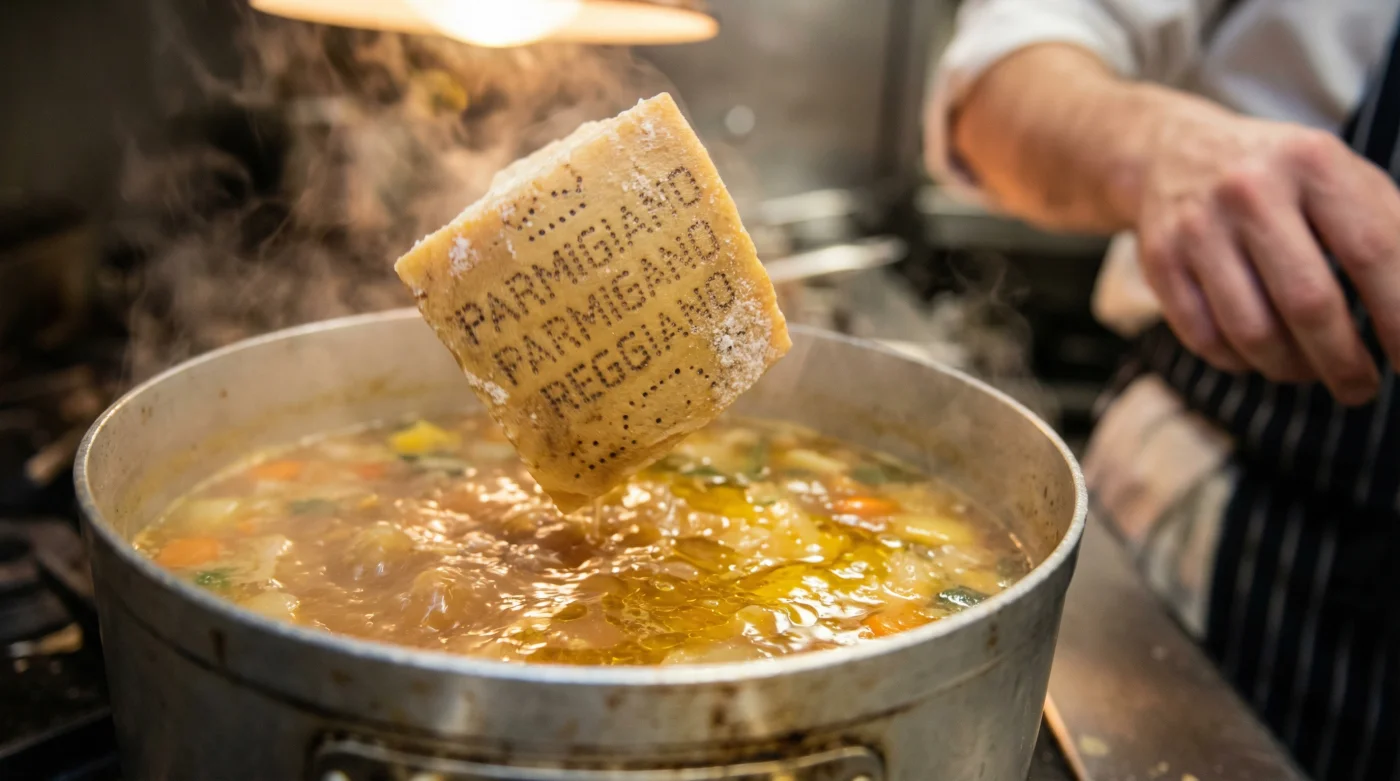
You stand by the kitchen counter on a Tuesday evening, staring out at the sort of damp, bruised-sky British winter night that sinks right into your bones. The kitchen is quiet, save for the rhythmic rasp of the metal grater against a wooden board. You finally reach the end of your wedge of Parmigiano-Reggiano. Your fingers brush the hard, slightly waxy, pale edge. Instinct tells you to toss it straight into the food waste bin. It looks spent, like a candle burned right down to the stubborn nub. But hold your hand. That hard stone of dairy is not rubbish, and treating it as such is robbing your winter cooking of its greatest secret.
The Memory of the Milk
We are conditioned by modern supermarkets to view the rind as packaging, an inedible barrier protecting the good stuff inside. But this is a fundamental kitchen myth that needs breaking. Think of the rind as a concentrated flavour battery. It is the most dense, time-hardened part of the cheese, holding onto the deep, savoury essence of the milk and the salt of the curing room. Because genuine Parmesan has no artificial wax or plastic coating, the entire exterior is completely natural. When you throw it away, you are quite literally tossing money—often at £25 a kilo or more—straight into the bin. You are throwing away the very foundation of resourceful meal planning.
I learned this years ago from Marco, a gruff, flour-dusted head chef running a tiny, steam-filled trattoria off Dean Street in Soho. He caught me scraping a cutting board of hard cheese ends into the bin during prep. He did not shout; he just sighed heavily, picked the pale knobbly rinds out of the rubbish, rinsed them under the cold tap, and dropped them into a massive, bubbling aluminium vat of minestrone. He tapped the side of the pot with a wooden spoon. ‘They breathe life into the water,’ he told me. ‘You boil the time right out of them.’
| Cook Profile | Target Soup Type | The Specific Benefit |
|---|---|---|
| The Busy Parent | Simple Tomato & Basil | Rounds out sharp tomato acidity, making the broth richer without relying on heavy cream. |
| The Frugal Batch-Cooker | Lentil and Root Vegetable | Adds a dense, meaty depth to exceptionally cheap, plant-based pantry staples. |
| The Weekend Host | Classic Ribollita | Creates a complex, restaurant-quality baseline that tastes as though it simmered for three days. |
The Quiet Alchemy of Simmering
This is the absolute essence of smart, use-what-you-have meal planning. The execution is beautifully, almost laughably lazy. You need to start keeping a small plastic tub or a silicone bag in your freezer. Every single time you finish a wedge of hard Italian cheese, drop the rind in. They sleep there in the frost, waiting patiently for soup season to arrive. You do not need to thaw them beforehand. They demand absolutely zero preparation beyond a quick rinse if they have gathered any breadcrumbs from your chopping board.
When you are sweating onions, celery, and carrots for a winter broth, pull a frozen rind from the cold. Do not attempt to chop it; your knife will slip, and you will achieve nothing but frustration. Once you add your stock, chopped tomatoes, or water to the pan, simply drop the whole piece of rind directly into the liquid. Bring the pot to a gentle simmer, turn the heat down low, and let the physical mechanics of the heat do the heavy lifting. As the liquid gently bubbles, the rind acts exactly like a savoury tea bag.
Over the course of forty minutes, it will swell, soften, and slowly surrender its stored glutamates into the broth. You will smell the transformation before you taste it. A toasted, nutty warmth will rise through the steam, filling the kitchen with a scent that feels undeniably comforting. You must stir the pot occasionally, just to ensure the softened cheese does not glue itself to the base of your pan. Beyond that, it requires no attention.
| Component | Mechanical Logic | Culinary Result |
|---|---|---|
| Glutamate Crystals | Dissolve slowly into the simmering water over 30-45 minutes. | A sudden surge in natural umami flavour without the need for excess table salt. |
| Hardened Dairy Fats | Soften and gently emulsify with the broth at temperatures above 85 degrees Celsius. | Gives the soup liquid a slightly thicker, silkier, more luxurious mouthfeel. |
| Aged Proteins | Release trapped aromatic compounds as the heat penetrates the dense core. | Produces deep, earthy, roasted aromas that permeate the vegetables. |
Before you ladle the soup into bowls, take a slotted spoon and fish the remains of the rind out. It will look like a soft, pale, exhausted sponge. Its job is done, and its flavour is entirely spent. You can discard it now with a clear conscience. The soup left behind in the pot will taste remarkably complex, as if you spent hours roasting meat bones and reducing stocks, rather than simply dropping a scrap of dairy into the water.
| What to Look For (Quality Checklist) | What to Strictly Avoid |
|---|---|
| The words Parmigiano-Reggiano dotted along the hard edge. | Generic hard cheese blocks with zero provenance or branding. |
| A natural, pale yellow colour with a rough, slightly uneven texture. | Perfectly smooth, shiny edges that feel distinctly rubbery to the touch. |
| A dry, earthy, almost hay-like scent when held to the nose. | Any cheese coated in black wax, red wax, or a thin plastic film. |
Reclaiming the Forgotten Edges
There is a profound, quiet satisfaction in wringing every last drop of value from your ingredients. In a world where weekly food shop prices constantly creep upwards, turning a perceived piece of waste into a potent seasoning feels like a tiny, domestic rebellion. It fundamentally changes your relationship with the kitchen space. You stop seeing scraps and start seeing hidden potential. You become a better, more intuitive cook.
- Parmesan rinds elevate basic winter soups with rich umami flavour profiles
- Ripe avocados stay perfectly green for days using this submerged water method
- Balsamic glaze drops require this specific spoon drag technique for restaurant plating
- Canned chickpeas contain a hidden liquid mimicking expensive vegan egg replacements
- Mayonnaise replaces traditional butter for creating the ultimate crisp grilled sandwich
The true mark of a resourceful cook is not what they buy, but what they refuse to throw away; the rind is the soul of the cheese, waiting to be woken up.
Frequently Asked Questions
Do I need to wash the rind before freezing it?
You do not need to wash it aggressively, but a quick rinse under cold water is wise to remove any rogue breadcrumbs or herbs it picked up on your chopping board.
Can I use Pecorino or Grana Padano rinds instead?
Absolutely. Any hard, naturally aged Italian cheese rind will work beautifully. Pecorino will yield a slightly sharper, saltier result, so adjust your seasoning accordingly.
Will the rind melt completely into the soup?
No, it will soften into a chewy, sponge-like mass, but it will not dissolve entirely. You must fish it out with a spoon before serving the meal.
How long can I keep the rinds in the freezer?
They will comfortably survive in a sealed container or freezer bag for up to six months without losing their aromatic potency.
Are there any cheeses I should absolutely avoid using?
Never use the rinds of cheeses that have been sealed in wax or plastic, such as Edam or certain Cheddars. Only use naturally formed rinds from aged cheeses.