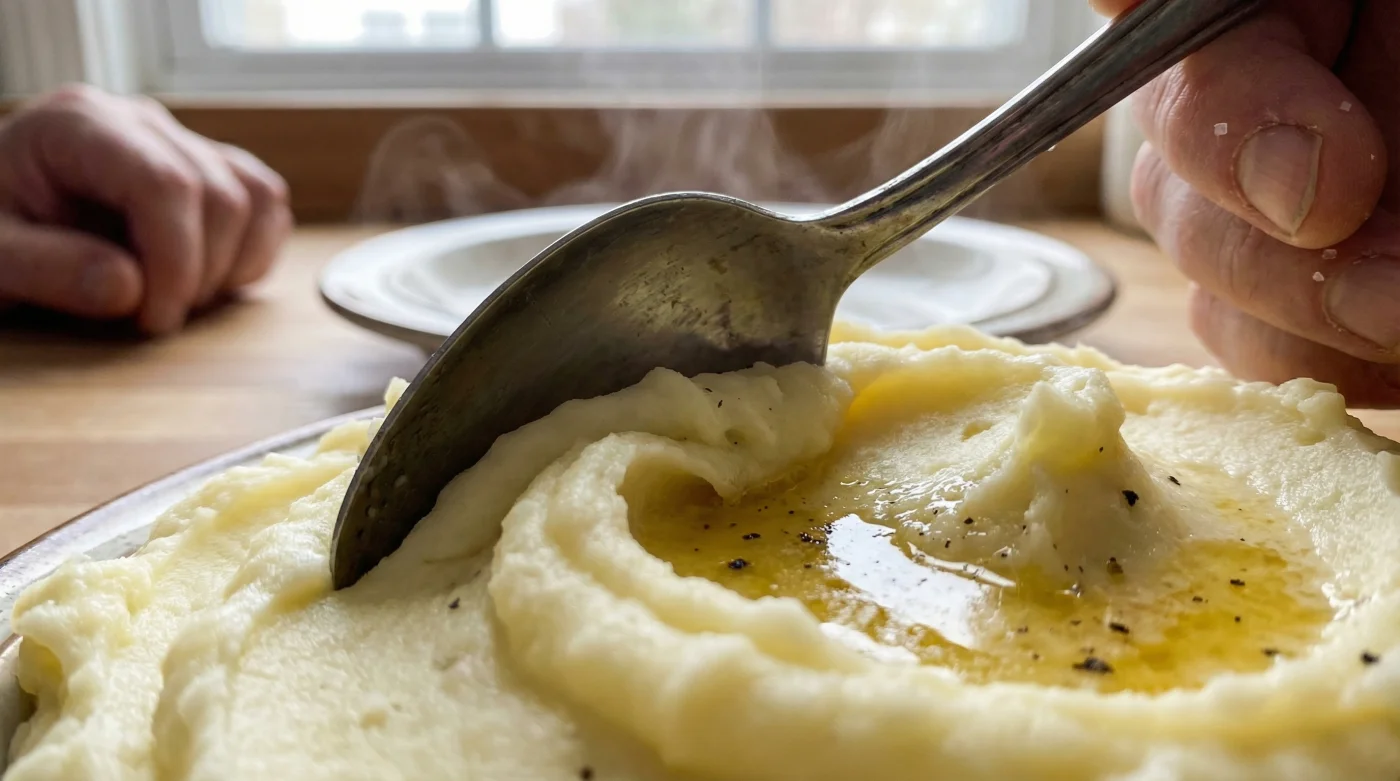
The kitchen smells of roasted rosemary and browned butter. You have spent the better part of your afternoon carefully tending to the stove. The beef has been rested to a perfect medium-rare, its juices settling quietly on the wooden cutting board, and the rich reduction is simmering gently in a saucepan. You are moments away from calling your guests to the dining table.
But then comes the moment of truth. You take a large metal spoon, scoop a generous dollop of your carefully buttered mash, and drop it onto the warm ceramic plate. Instantly, the illusion is broken. Despite the hours of preparation, the plate looks like a hurried Tuesday night tea in front of the television, rather than the sophisticated dinner party centrepiece you originally envisioned.
This is the silent frustration of the passionate home cook. We pour our energy into achieving the perfect texture—making sure the double cream trembles just before mixing, passing the Maris Piper potatoes through a ricer so the mixture feels like breathing through a pillow—only to falter at the final hurdle. The presentation falls flat because a mound of potato, no matter how exquisitely seasoned, stubbornly remains just a mound.
Yet, the difference between a homely dollop and a sleek, restaurant-ready aesthetic is quite literally a flick of the wrist. You do not need to invest in a piping bag, nor do you require a set of culinary tweezers. You simply need an ordinary dessert spoon, a plate, and a slight shift in how you view the food you are serving.
The Canvas of the Plate
Think of a traditional serving of root vegetable puree like a full stop at the end of a sentence. It halts the eye entirely. It sits heavily on the porcelain, refusing to interact with the rest of the meal. But on a professional pass, puree behaves differently. It acts as a comma, a sweeping curve that naturally carries the eye towards the sliced protein and the glossy pan sauce.
The central mistake is treating the starch as an isolated lump of food. Instead, you must treat it like wet plaster. When you drop your mashed potato onto the dish, the plating process is not finished; the puree is merely placed, waiting for the deliberate, sweeping pull of a tool to shape its final surface.
This technique changes the entire landscape of your dish. By dragging the potato across the porcelain, you create a shallow, swooping bed. This subtle valley catches pooling gravy so it does not flood the plate, holds roasted carrots at a jaunty, deliberate angle, and creates a physical barrier that stops the meat from sliding into the rim as the plate is carried to the table.
Marcus Thorne, a 42-year-old sous-chef at a Cornish coastal brasserie, spends his Friday evenings plating hundreds of portions of confit duck on top of potato puree. Watching him work is like watching a metronome. He drops a scoop, presses the back of his spoon slightly off-centre, and pulls it swiftly through the mash in a shape resembling a crescent moon. “People assume we use fancy moulds,” Marcus chuckles. “It is literally just trusting the spoon’s belly. If you hesitate, it looks jagged. If you commit to the motion, it looks like spun glass.”
Adjusting for Your Menu
Not every meal demands the exact same flourish. How you shape that starch depends entirely on what you are intending to rest upon it. The geometry of your plate should mirror the weight and style of the ingredients you are serving.
For the Delicate Fish Supper
When serving a flaky piece of pan-fried sea bass or a delicate loin of cod, the puree needs to be a gentle, unobtrusive foundation. Enter the ‘teardrop swoop’. Drop a slightly smaller spoonful onto the plate, press the back of the spoon flat against the potato, and drag it in a tight, straight line towards yourself. This creates a neat runway, ensuring the fish skin stays crisp while the tender flesh rests securely against the potato.
For the Hearty Sunday Roast
A thick slice of roast beef or a heavy braised lamb shank requires serious architecture. This is where you deploy the ‘crater drag’. Plop a large, round scoop onto the plate. Instead of pulling it across the porcelain, press the spoon into the dead centre and pull in a tight circle, hollowing out the middle and creating a deep, walled swimming pool.
- Standard mashed potatoes elevate dinner party plates using this professional swooping technique
- Separated hollandaise sauce binds instantly using this simple boiling water hack
- Canned black beans multiply their nutritional value when paired with this common pantry spice
- Trending overnight oats require this exact five-minute prep method for optimal morning texture
- Scrambled eggs achieve rich restaurant creaminess with this two-ingredient dairy trick
The Mechanics of the Swoop
Executing this technique at home requires a mindful approach to temperature and texture. If your mash is too stiff and dry, it will tear and look ragged. If it is too loose, it will simply spread out into a thin puddle before you can even reach for the gravy boat.
You are aiming for a consistency that holds its shape gracefully but yields effortlessly to the touch of metal. It must feel exactly like softened butter in summer.
Here is your tactical toolkit for executing the perfect professional swoop at home:
- Use a completely dry, hot dessert spoon (dip it quickly in a mug of boiling water, then wipe it thoroughly with a dry tea towel).
- Dollop the mash slightly off-centre on the plate, leaving plenty of negative space for the eye to rest.
- Place the convex back of the spoon onto the top of the mash, applying gentle but firm downward pressure.
- In one fluid, confident motion, drag the spoon through the puree, tracing a semi-circle or a straight line depending on your desired shape.
- Lift the spoon sharply at the very end of the drag to create a clean, tapering tail.
The absolute golden rule here is momentum. If you stop halfway through the drag to check your progress, the surface will ripple and look overworked. Trust the physical movement of your hand and pull straight through to the end.
More Than Just Presentation
We eat with our eyes long before we ever pick up a knife and fork. But mastering this seemingly aesthetic detail offers more than just visual appeal. It fundamentally changes how you experience the meal you have worked so hard to prepare.
When a plate looks dishevelled, you feel rushed, as if the cooking process is merely a chore to be completed. When a plate looks intentional and beautifully arranged, you slow down entirely. You begin to notice the gloss of the sauce, the vibrant contrast of the colours, and the complex aroma rising off the warm ceramic.
Taking those three extra seconds to sweep a spoon through a puddle of potato forces a moment of pause at the pass. It shifts your internal mindset from the frantic panic of cooking to the calm hospitality of serving a thoughtfully prepared meal.
You stop being the exhausted cook rushing hot pans to the sink. In that brief, sweeping motion, you become the host, confidently presenting a beautiful, delicious gift to your friends and family.
“The back of a dessert spoon is the most under-utilised paintbrush in the domestic kitchen.”
| Plating Technique | Execution Detail | Added Value for the Reader |
|---|---|---|
| The Classic Mound | Scooped directly from the pan and dropped. | Provides rustic charm, but frequently causes delicate pan sauces to run off the sides of the plate. |
| The Comma Swoop | Dragged in a sweeping arc with the back of a hot dessert spoon. | Creates an elegant, professional bed for proteins and stops ingredients from sliding around. |
| The Crater Drag | Pressed strictly in the centre and rotated in a tight circle. | Ideal for holding large volumes of rich gravy without flooding the rest of the meal. |
Why does my mash tear and look ragged when I try to swoop it?
Your potatoes are likely too dry or slightly cold. Ensure you have beaten in enough warm butter and cream, and plate while the mash is still steaming hot.Can I achieve this look with dairy-free mashed potatoes?
Absolutely. As long as you replicate the fat content using a quality olive oil or plant-based butter, the starch will drag beautifully across the plate.What exact type of spoon works best for this technique?
A standard stainless steel dessert spoon with a deep, curved belly is perfect. Avoid flat-edged wooden spoons or sharply angled serving utensils.How do I keep the food piping hot while I fuss over plating?
Always heat your ceramic plates in the oven on a low temperature before serving. A warm plate gives you an extra minute of grace to plate carefully without the food going cold.Does this sweeping trick work with other vegetable purees?
Yes. This technique works brilliantly with celeriac puree, sweet potato mash, or even a thick, blitzed cauliflower puree. The principle of the swooping drag remains exactly the same.